“An intricate horror mystery” — The BookLife Prize
“An unexpected fairy-tale foundation” — The BookLife Prize
“A unique mythology” — The BookLife Prize
"Clinical precision blended with grisly imagery”— The BookLife Prize
“Natalia and Lucien are well crafted adversaries”— The BookLife Prize
“An intricate horror mystery” — The BookLife Prize “An unexpected fairy-tale foundation” — The BookLife Prize “A unique mythology” — The BookLife Prize "Clinical precision blended with grisly imagery”— The BookLife Prize “Natalia and Lucien are well crafted adversaries”— The BookLife Prize
A body that should not exist.
A mystery that refuses to die.
Natalia knows what she saw that night: a dead girl who should not have been alive.
She is told she was mistaken. But the memory follows her for years, damaging her career and shadowing a marriage that ends not in estrangement, but in loss.
Her search leads somewhere she never expected—a hidden world where medicine, wealth, and mortality intersect, and where the boundaries between victim and survivor are no longer clear.
Some mysteries should stay buried.
Some diseases should not be moved.
The Pathology of a Girl in the Alley
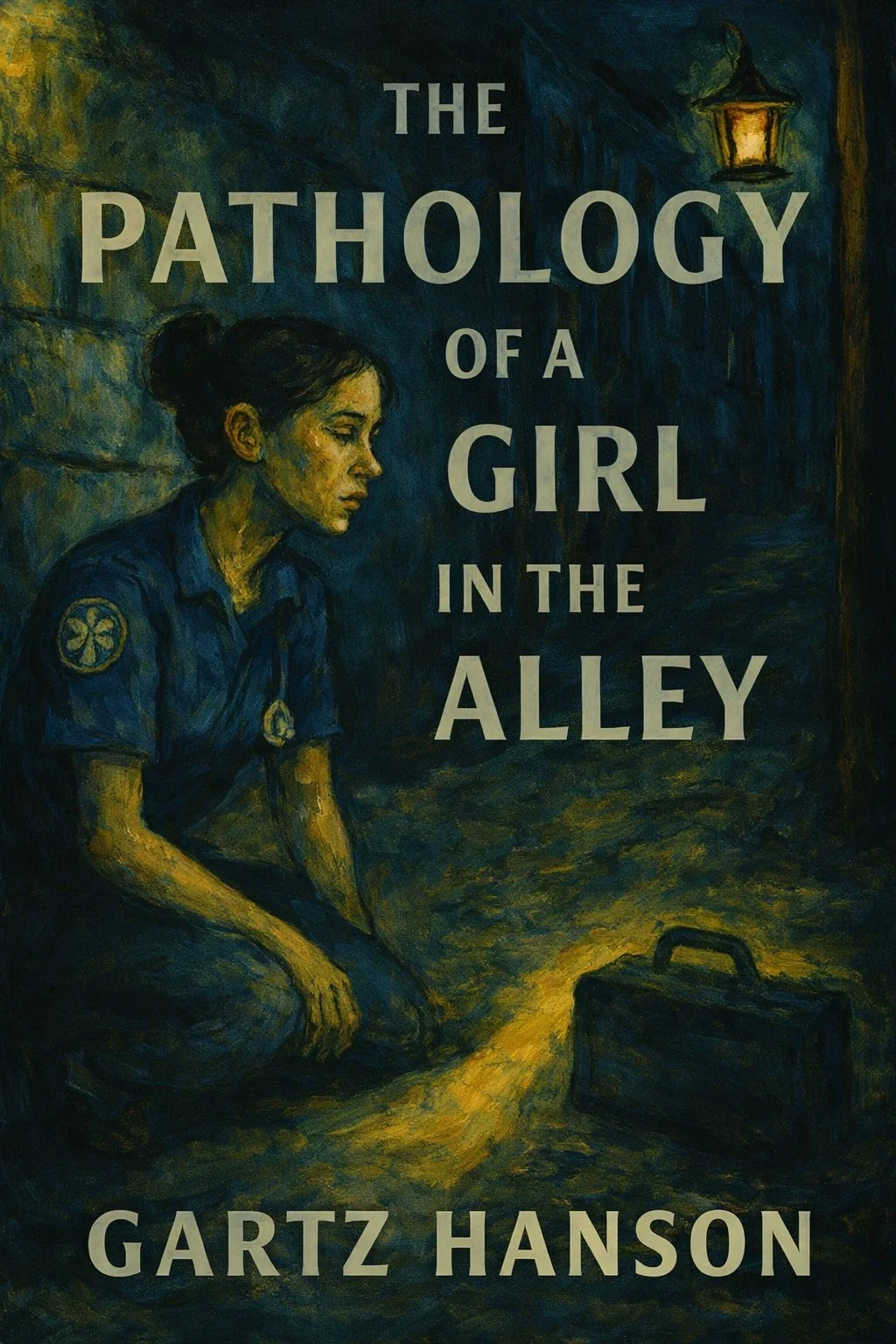
Art Inspired
Some of the characters in The Pathology of a Girl in the Alley began with paintings.
Gerardo Moreno, my late father-in-law, gave me the first visual impressions of characters and atmosphere that would eventually become part of Natalia's story. I didn't set out to reproduce the people in these paintings. Instead, their expressions, posture, surroundings, and emotions became starting points for the characters.
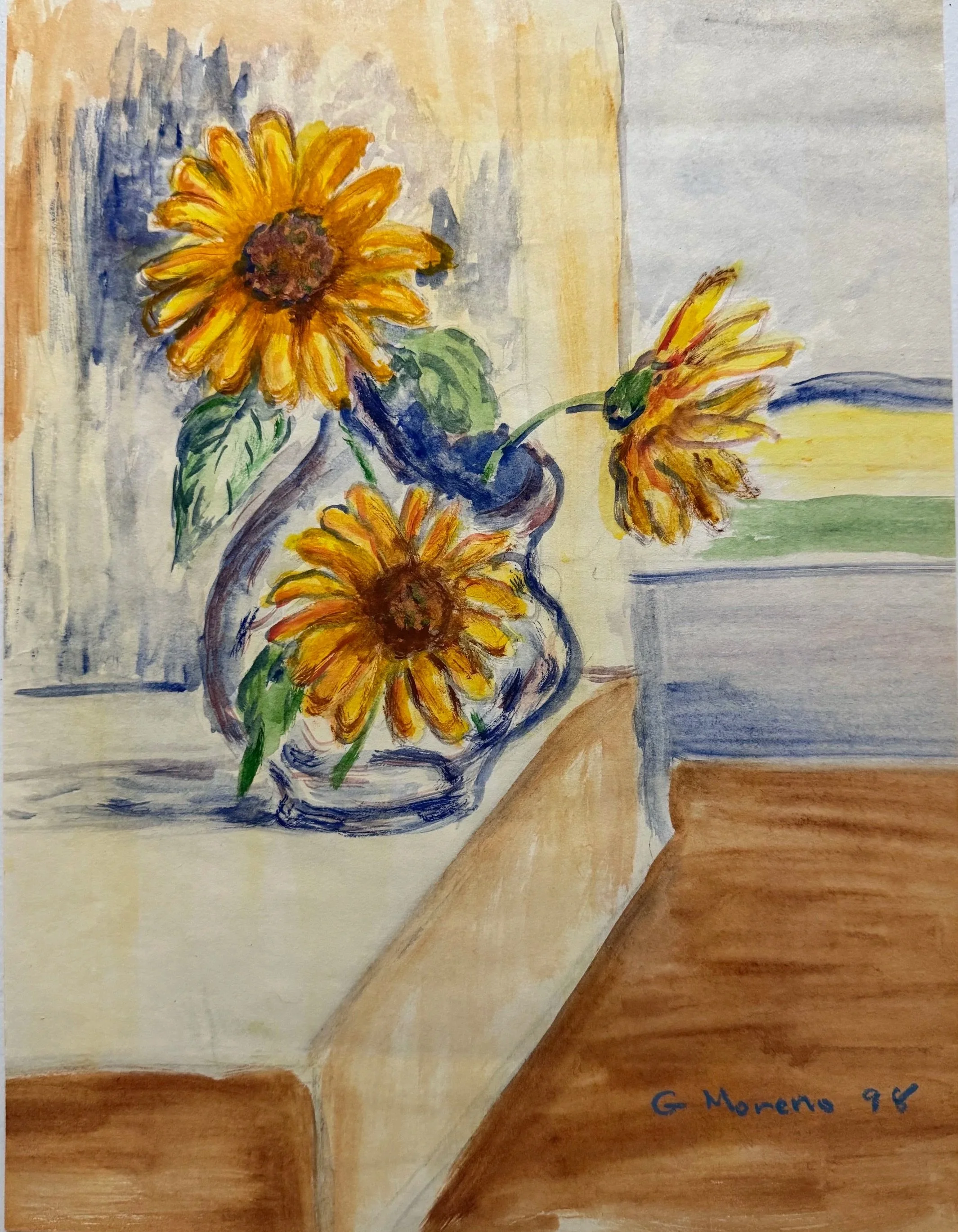
This painting became the inspiration for one of the recurring motifs in The Pathology of a Girl in the Alley.
What stayed with me was the sunflower itself. Even cut from the earth and placed in a vase, it seems to turn toward the window, searching for the light. In the wild, sunflowers follow the sun. They orient themselves toward whatever gives them life.
That idea stayed with me as I wrote Natalia, Jason, and Jonathan.
The sunflower appears throughout the novel in small, sometimes almost incidental ways.
I never intended the sunflower to become a symbol when I first began writing the book. It happened gradually. The image kept returning until I realized that the flower had become part of the story itself.
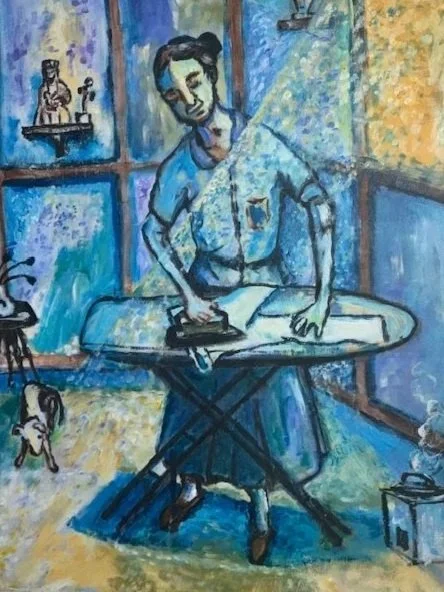
This painting became one of the visual inspirations for Natalia's Abuela.
I was drawn to the woman at the center of the painting. The sense of a life being lived quietly, surrounded by the ordinary details of a home. Something about her expression suggested a history that existed beyond the frame.
That feeling stayed with me as Abuela developed as a character.
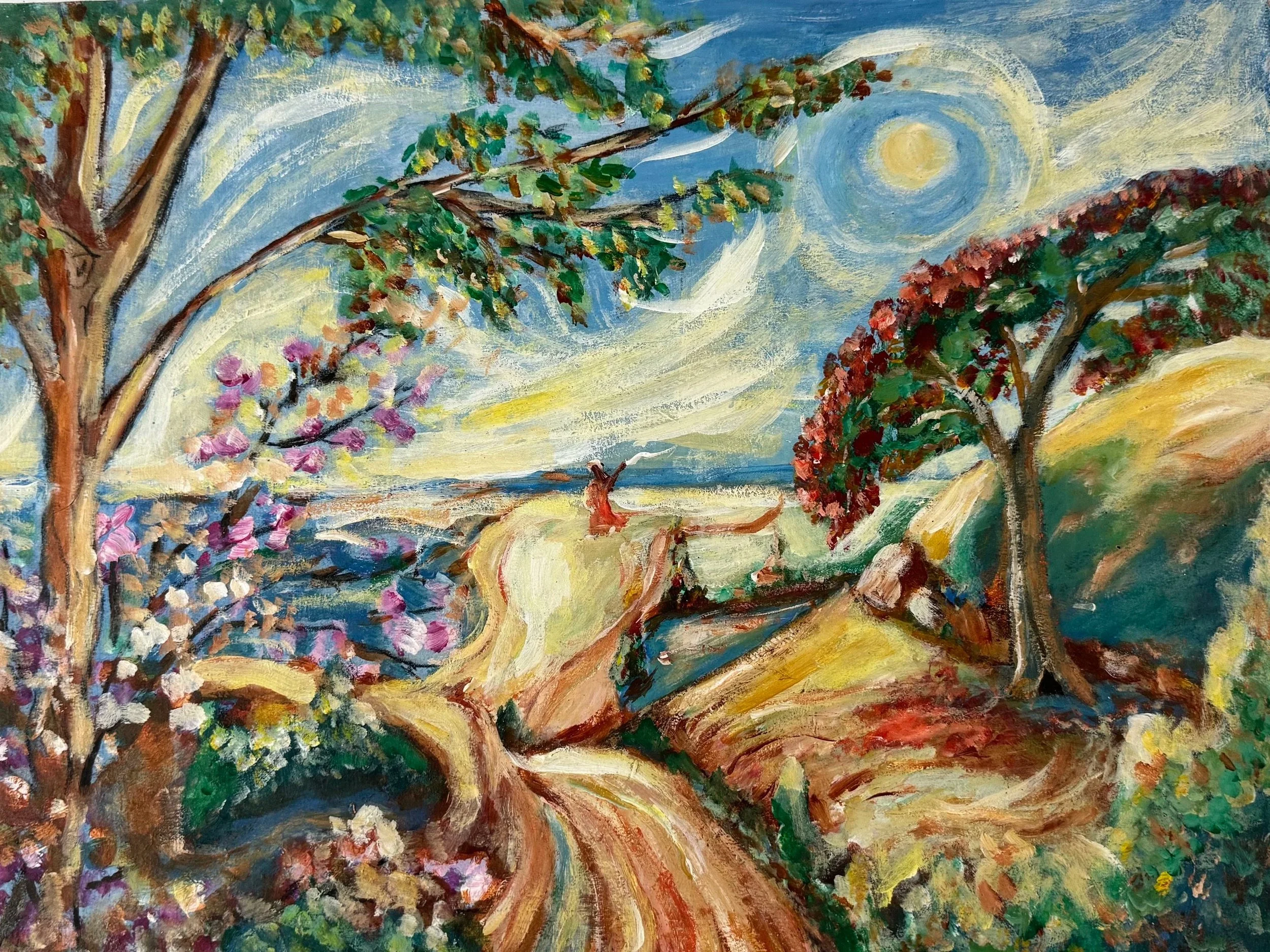
This painting became part of my inspiration for the trip to Puerto Rico section of The Pathology of a Girl in the Alley.
There is something about it that feels alive beyond the person standing inside it. The tree seems ancient. The vines and flowers are slowly reclaiming the landscape, moving closer to the road, creating a boundary between one world and another. The light above it seems to come from somewhere deeper, richer, and more loving.
Puerto Rico is where Natalia begins to move closer to the history she inherited without fully understanding it. She grows closer to her family and her in-laws, and love begins to grow around everything that came before it.
When I look at this painting, I see a landscape that has kept its secrets.
Not simply a place Natalia visits.
A place that remembers what happened before she arrived.
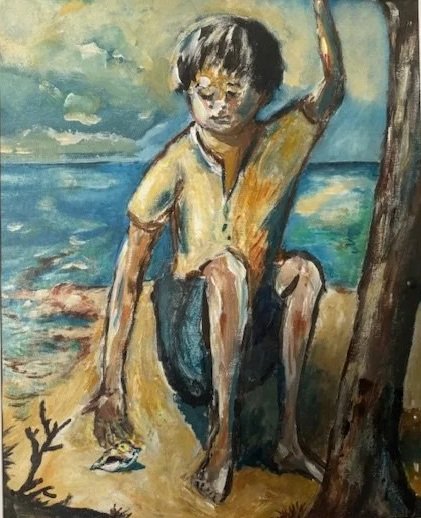
Jason began with this painting. The painting is of my brother-in-law as a child on the beach.
What caught me first was the boy's isolation. He seems completely absorbed in his own thoughts, removed from the world around him. The landscape feels expansive, but he remains alone within it.
This was Jason's Virginia: a beach, an estuary, or simply a weekend visiting the Chincoteague area.